Common construction methods of steel truss beams
Apr 15, 2021
Steel truss beams can be erected in a variety of ways according to the actual topography, and the construction methods are flexible and diverse. The commonly used construction methods of steel truss beams include bracket method, cantilever assembly method, jacking method, dragging method, floating method, floating method, whole hole hoisting method, turning method, etc.
1. Scaffolding method (scaffolding method)
The bracket method is a method of erecting a floor stand at the bridge location and assembling steel truss beams on it.
The operation of this method is simple and easy, and a jack can be used on the support to adjust the bridge alignment to ensure the assembly progress.
This method is only applicable to steel beams across highways with low clearance under the bridge and steel beams across rivers with shallow water flow; the premise is that it does not affect navigation or traffic under the bridge.

2. Cantilever assembly method
The cantilever assembly method uses a mobile steel-leg jib crane to assemble rods on one side and move forward on the other side.
Cantilever assembly method is the traditional installation method of large-span steel truss girder. Wuhan Yangtze River Bridge, Nanjing Yangtze River Bridge and Jiujiang Yangtze River Bridge are all constructed and installed by cantilever method. At present, full cantilever assembly, semi-cantilever assembly, and two-way symmetry cantilever assembly are still one of the main methods of steel truss erection.
One of the pictures below is the cantilever construction of the Jinan Yellow River Bridge on the Beijing-Shanghai High-speed Railway. When the cantilever is large, it can be supplemented with a sling tower for the cantilever assembly of steel truss beams. The following figure shows the 196m steel truss beam of the Changshou Yangtze River Bridge and the 112m steel truss beam of the Shanghai Jinshan Railway branch line. Assembly method construction.
The cantilever assembly method is not restricted by hydrological conditions, navigability, pier height, etc. It has low auxiliary structure or equipment cost. It is relatively high in the bridge position, has a large span, navigable rivers, rapid water flow, and can not be used to build a full-scale scaffold. installation.


3. Pushing method
The construction principle of the jacking method is to set up an assembly yard behind the platform along the longitudinal direction of the bridge. After the steel beam is assembled, force is exerted by a horizontal jack, and the steel beam is pushed forward with the help of slides and sliding blocks. seat.

Multi-point simultaneous jacking: In single-point jacking, the bridge pier bears a large one-way horizontal thrust, so the jacking force is distributed on each pier (called multi-point). For a single pier, the jack The output is balanced with the frictional resistance of the beam on the pier, and the pier does not bear excessive horizontal thrust.
The multi-point synchronous jacking technology was adopted for the construction of the porous 168m steel truss girder of the Zhengzhou Yellow River Highway and Railway Bridge. The leading beam is 108m long, the girder is 14m high, and weighs about 750t. There will be no temporary buttresses in the main channel of the Yellow River. Two 350t jacks are installed on the top of each pier on the 1st to the 7th pier.

4. Drag method
A continuous upper slide is set under the longitudinal beams of the assembled steel truss beams, a slide slide is set on the temporary buttresses, and a certain number of rollers are placed between the upper and lower slides, and the steel beam is drawn longitudinally along the bridge axis through the traction equipment To the design bridge hole.

During the drag method construction, the bridge head needs to have a pre-assembled site, a certain number of slides, and a certain number of temporary buttresses need to be arranged. The simply supported steel truss girder of the 64m railway of the Ocean Railway is erected by the drag method.

5. Floatation method
At the riverside end of the steel beam, brackets are set up on the pontoon and on the shore to complete the assembly of the steel truss beam. A slideway is set under the steel beam, and the steel truss beam is dragged to the opposite bank by the pontoon. The following picture shows the construction of the 112m steel girder of the Beijing-Hangzhou Grand Canal Bridge on the Ningqi Line using the floating-towing method.

6. Floating method
Assemble steel beams on the shore or on a pontoon. After the steel beams are assembled, they are floated to the bridge location.
7. Whole hole floating method
For cross-river and cross-sea steel beams, large-tonnage floating cranes can be used to hoist the whole-hole steel beams in place at one time. The lifting tonnage of floating cranes is very large, ranging from several hundred tons to several thousand tons, or even tens of thousands of tons. Various floating cranes with different lifting tonnages can be used according to actual needs.
The Øresund Bridge between Denmark and Sweden adopts the large-segment (140m) floating crane method for steel truss erection, with a lifting tonnage of about 6000t.

For the Chayanghe Bridge on the Ocean Railway, the 64m main span steel truss girder is hoisted in place by a whole-hole floating crane at one time. The lifting tonnage is 251 tons. It took 4 hours.

8. Rotation method
When steel beams cross over an existing road or railway at a small angle, a number of temporary piers can be erected along the direction of the existing road, and the steel truss beams can be assembled on these temporary piers, and then the temporary piers at the beam end are opposite to the railway A slideway is set up between the piers of the bridge, and a PTFE skateboard is laid on the slideway to reduce the friction. The fixed steel beam is equipped with a turntable at one end, and finally the steel beam is gradually rotated through the slideway to the design position by pulling the steel beam. The 96m steel truss girder on the Shanghai Jinshan Railway branch line and the 132m steel truss girder of the Guchengwan Bridge on the Jibao Railway are all constructed using the rotation method.

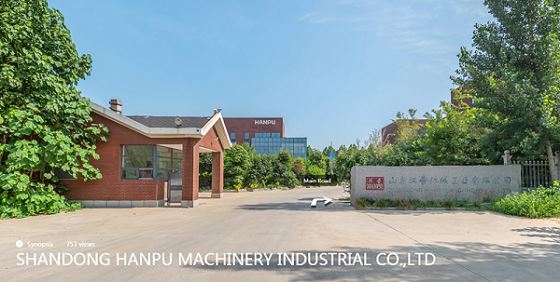
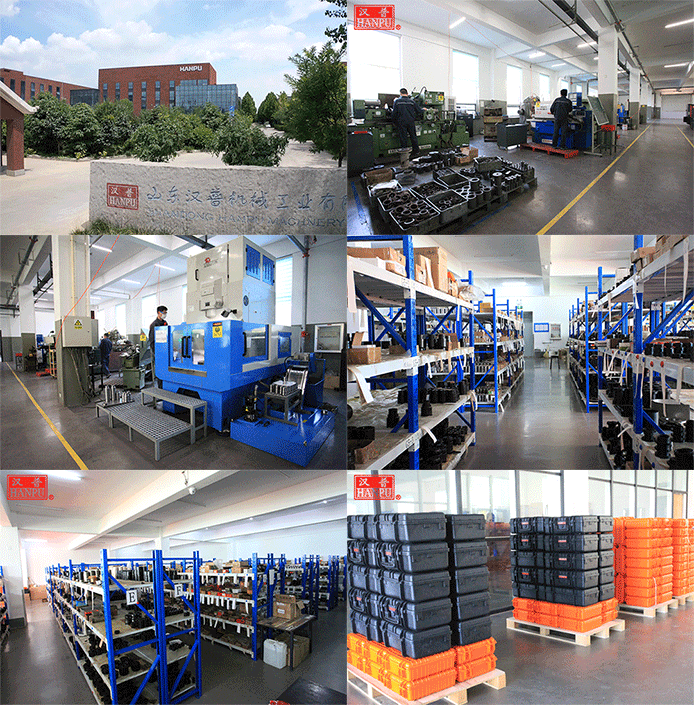
Shandong Machinery Industrial Co., Ltd. is a professional power tool manufacturer integrating R&D, production and sales. Main products: electric shear wrenches, electric torque wrenches, portable bolt torque testers, axial torque meters, axial force meters, etc. After more than 20 years of innovation and development, the company now has 62 acres of industrial parks and 30,000 square meters of production and research and development workshops. It has introduced a large number of high-end processing equipment made in Switzerland, Germany, and Japan, and has become a large-scale electric wrench production base in China.


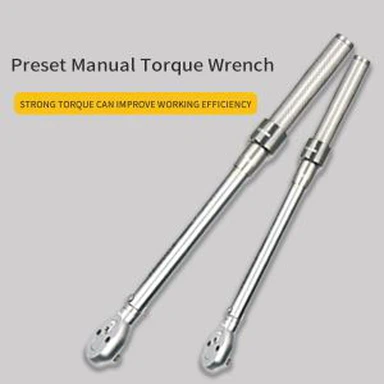
OAK electric torque wrench is specially designed for tightening hexagonal bolts with torque requirements. It is equipped with a torque controller and the output torque is adjustable within a certain range. When working, the torque value needs to be set in advance. When the wrench reaches the set torque value, the wrench automatically stops.
Product Manager : Ms.Linda (linda@hanputool.com/+86-186 5349 8089)
Product Videos on YouTube website : https://www.youtube.com/channel/UCLlhwcz-KHAjj43Xkl-3cfA/