What Tools Are Used For Tightening High-strength Bolts And Advantages And Disadvantages?
May 29, 2025
Manual Wrenches
Manual wrenches are the most traditional and widely used tools. Common types include open-end wrenches, box-end wrenches, and socket wrenches.
Advantages
Cost-effectiveness: Manual wrenches are affordable with low purchase costs, making them an economical choice for small-scale projects or occasional bolt-tightening tasks.
Ease of operation: Requiring minimal training, they are accessible to almost anyone. Proper gripping and force application techniques enable effective bolt fastening.
Versatility: Unrestricted by power or air supply requirements, they can be used in diverse environments – particularly in field operations or areas without power access. Their varied shapes and sizes allow adaptation to confined spaces or hard-to-reach bolts.
Precise control: Operators can leverage experience and tactile feedback to finely adjust tightening force, preventing bolt damage or component deformation from over-tightening.
Disadvantages
Low efficiency: Manual tightening demands significant physical effort and time. For large-scale bolt-fastening operations, labor intensity is high with notably low productivity.
Poor torque accuracy: Reliance on human operation makes consistent torque application challenging, often resulting in uneven clamping force that compromises joint reliability.

Electric Wrenches
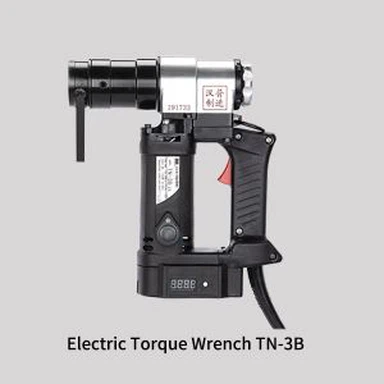
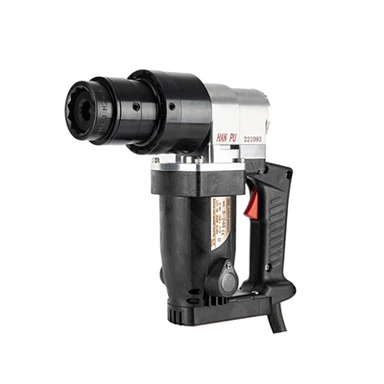
Electric wrenches utilize electrical power to achieve rapid bolt fastening.
Advantages
High efficiency: Compared to manual wrenches, electric wrenches significantly boost productivity, enabling completion of large-scale bolt fastening tasks within short timeframes – ideal for time-sensitive projects.
Enhanced torque control: Advanced models feature torque control systems that allow preset torque values. The wrench automatically stops upon reaching the target torque, ensuring consistent clamping force.
Reduced operator fatigue: Electrical drive mechanisms eliminate strenuous manual torque application. Operators need only control positioning and trigger operation, substantially lowering physical exertion.
Disadvantages
Power dependency: Requires stable electrical supply. Performance is compromised in remote locations or areas with unreliable power access.
Higher maintenance costs: Complex internal structures (motors, control circuits, etc.) result in difficult repairs and elevated maintenance expenses when failures occur.
Safety concerns: Pose potential hazards in specialized environments such as damp conditions or combustible atmospheres, necessitating additional protective measures.
No matter which type you choose, please contact our sales manager, they can give you the most suitable suggestion.
Email: marketing@hanputool.com or WhatsApp: +86 18653495537