Main features of steel bridge
Mar 18, 2021
1. Advantages
1) High-strength homogeneous material: Steel is a material with high tensile, compressive, and shear strength. It can withstand tension, compression, bending, and shear, and has a small dead weight compared with concrete and other materials (usually weight The strength ratio indicates the relative weight of the two materials in the structural sense), so the steel bridge has a great spanning ability. The bridge span is very large and the load is very heavy. When it is difficult to build the bridge with other materials, steel bridges are generally used. The steel has good machinability and can be used for complex bridges and landscape bridges.

2) The components of the steel bridge are most suitable to be manufactured by industrialized methods, which are convenient for transportation and construction without brackets, and the installation speed on the construction site is also fast. Therefore, the construction period of the steel bridge is relatively short.
3) Good toughness and ductility, which can improve seismic performance.
4) After the steel bridge is damaged, it is easy to repair and replace.
5) The old bridge can be recycled and the resources can be reused, which is good for environmental protection.
2. Disadvantages
The main disadvantage of steel is that it is susceptible to corrosion and requires frequent inspections and regular painting. The noise and vibration of railway steel bridges are relatively large when driving.

01/Structure and force
1. Thin-walled structure
In order to improve section efficiency, steel bridges are generally made of thin-walled structures, and the stress calculation should consider the effects of shear lag, torsion (free torsion, constrained torsion), and warping.

2. Stable
The rigidity of the steel bridge structure is small, and the stability problem is prominent. As a thin-walled structure, in order to prevent local instability of the plate, it is necessary to provide stiffening ribs and limit the width to thickness ratio of the plate.

3. Stiffness
The rigidity is small. In the design, the slenderness ratio, deflection and width-span ratio of the steel bridge are restricted to ensure the rigidity of the bridge.

4. Fatigue
The fatigue strength of components and connections is affected by materials, connection methods and methods, load properties, stress states, stress amplitudes and stress ratios.

5. Connect
Steel bridge components are generally welded by steel plates and section steels, and assembled with high-strength bolts or site welding.

02/Steel bridge processing and installation

The content and the marked size of the steel bridge design drawing refer to the shape and size of the structure in the completed state of the bridge. The task to be completed in the production of steel bridges is to use steel plates and section steels as the main raw materials, and process them into transportable units or components in the factory according to the requirements of the steel bridges, until they are packaged and shipped. Steel bridge installation is to hoist the factory-made components or units into place and connect them to form a bridge, and meet the requirements of the structural force, structural shape and size of the design drawing. The factory processing of steel bridge components requires material pretreatment, sample preparation, numbering, cutting, straightening, edge processing, hole making, assembly welding, welding, shaping, inspection, trial assembly, rust removal, painting, packaging and delivery, etc. Road process. During the processing of the steel structure, the steel plate or section steel will produce various deformations. At the same time, in the process of steel bridge installation (especially site welding) will also produce non-negligible deformation. These deformations must be considered in advance when the steel bridge parts are blanked, otherwise problems such as dimensional errors are likely to make the production and installation of the steel bridge difficult, and even the completed bridge cannot meet the requirements of the design drawings.

Therefore, after the factory accepts the design drawings, it must first draw the steel structure unit and component drawings according to the various raw material sizes that can be purchased, the processing capacity and transportation conditions of the factory, etc., that is, the factory processing drawings. The processing drawings consider the pre-camber, Manufacturing and installation deformation, etc., explain the processing technology, and get the approval of the designer and the owner. Secondly, the factory needs to draw the parts drawings of the various components of the steel bridge according to the requirements of the processing drawings. The parts drawings are the basis for the factory's sample, number and various production of CNC machine tool control data. It is necessary to consider the various aspects of the steel bridge processing and installation process. Deformation and other influences and requirements such as welding seam and cutting margin.
03/General requirements and principles of steel bridge design

Steel bridges are generally made of steel plates, section steels, etc., with many processing procedures and complex processes, requiring high technology and specialized factory production. In order to facilitate control and ensure the quality of steel bridges, steel bridges generally use factory welded components and on-site assembly (high-strength bolt connection or site welding). The steel structure design should be considered as a whole with the erection plan, and it should be economical and reasonable, convenient for processing, convenient for transportation, installation, and inspection and maintenance. The steel bridge is a high-strength, light-weight thin-walled structure with a smaller cross-section and dead weight than a concrete bridge, and a larger span. At the same time, the rigidity of the steel bridge is relatively small, and the deformation and vibration are greater than that of the concrete bridge. In order to ensure vehicle safety and comfort, and avoid excessive deformation and vibration from adversely affecting the steel bridge structure, the steel bridge must have sufficient overall rigidity. The code stipulates that the vertical deflection caused by the vehicle load should not exceed a certain allowable value.

Under the action of dead load, the bridge structure will deform. In order to ensure that the line shape of the bridge surface after completion of the steel bridge is as consistent as possible with the line design line shape, when the dead load deflection is large, the bridge span structure should be set with a pre-camber. The highway steel bridge code stipulates that when the vertical deflection caused by structural gravity and static live load exceeds 1/1600 of the span, the pre-camber shall be set, which is equal to the vertical deflection caused by structural gravity and 1/2 static live load The sum, the camber should be made into a smooth curve. If the bridge deck is on a vertical curve, the pre-camber shall be consistent with the vertical slope of the vertical curve. When using site welding for steel bridges, structural deformation due to welding must also be considered. Especially when the steel bridge deck is welded, the steel beam bottom plate and the web are bolted to the hybrid connection structure form of the bridge, when the support is connected in a stress-free state, the deformation caused by welding is relatively large, and even close to or exceed the constant load deflection.

In order to prevent the lateral instability and excessive lateral vibration of the steel bridge, the bridge structure should have the necessary lateral rigidity. Especially for railway steel bridges, the width of the bridge is narrow, the live load is large, and the snake motion of the train is prone to lateral vibration, and the problem of lateral stability is more prominent. In super-long-span highway steel bridges, the width-to-span ratio decreases, and lateral instability may also occur. Especially for long-span steel arch bridges, the lateral stability of the structure should be ensured in terms of structure and structural dimensions. Generally, when the span length exceeds 20 times the bridge width, the lateral stability of the bridge structure should be checked. The bridge span structure should also ensure horizontal and vertical overturning stability during construction and erection. The code for highway steel bridges stipulates that the stability factor should not be less than 1.3.

The design of the steel bridge must not only meet the requirements of the force and work performance in the use phase, but also analyze the force conditions such as construction hoisting and adjustment of the support, so that the steel bridge meets the requirements of stress and deformation during the construction process, taking into account the requirements of the hoisting process. Inertial effects and other unforeseeable adverse factors, the highway steel bridge code stipulates that the lifting equipment and the structure itself should be checked according to the lifting weight by 30% during the steel bridge construction check. The biggest disadvantage of steel bridges is that they are prone to corrosion. Improper design and maintenance of steel bridges will seriously affect the durability and service life of steel bridges. At present, the anti-corrosion life of the most heavy anti-corrosion paint coating used in steel bridges is only about 10 years, and steel bridges need to be removed from floating rust, old paint and repainted many times during the design period of use. Sufficient space and access channels must be reserved for all parts of the steel bridge that may be corroded. For example, the diaphragms of the box-shaped structure need to be opened and meet the minimum size requirements for personnel to pass to ensure the maintainability of the structure. Otherwise, reliable measures must be taken, such as making the structure a completely enclosed form to prevent steel corrosion, etc., to ensure that the steel bridge structure does not corrode during the design period of use, or the corrosion is controlled within a predetermined level. It is necessary to avoid the use of box-shaped sections with small beam height or beam width or unnecessary closed structures to reduce the difficulty of welding and maintenance in the box.

Another disadvantage of steel bridges is fatigue. The main factors affecting steel bridge fatigue are: steel quality, load properties, stress state, connection structure and method, structure details, etc. The design of the steel bridge must use steel with sufficient toughness to avoid stress concentration and fatigue-prone structural details, connection structures and methods as much as possible. The degree of gradual change of the cross-section of the structure in its force transmission path is the main factor affecting the stress concentration. The rapid change of the cross-section should be avoided in the design of steel bridges. For example, set the curve transition section as much as possible in the T-shaped connection to avoid corners. Since the tightness between the layers of the unbolted or unwelded contact part cannot be guaranteed, it is easy to form a fine seam to absorb water and is not easy to dry. In order to prevent the steel beam from rusting, there should be no unbolted or unwelded contact in the steel beam structure section. Small pits and grooves on the steel beam components can easily cause water accumulation and should be avoided. At the same time, for box-shaped structures or parts where water may accumulate, drain holes should be opened to prevent water accumulation due to air condensation and water leakage. For the open cross-sectional form, the details of the structure that are easy to accumulate water and dust should be avoided as much as possible.

In order to improve the efficiency of steel bridge fabrication and installation, the types of components and parts should be reduced as much as possible, and the component design of steel structures should be standardized as much as possible, so that components of the same type can be interchanged. The size and weight of the steel bridge component unit should fully consider the transportation conditions, transportation capacity and lifting capacity from the factory to the bridge site. In the case of land transportation, the width and length of the components shall not exceed the maximum size of vehicles and roads that can be transported. At the same time, the workload of site assembly or installation should be reduced as much as possible, site connections should be reduced, construction speed should be accelerated, and structural quality should be improved. For example, when water transportation and large floating cranes are used for hoisting, large sections or even whole holes can be used for hoisting.

When installing or repairing the support of a steel bridge, it is often necessary to jack up the beam, so the structure should be preset for the jacking function (such as preset stiffeners, corbels or in the middle of the continuous beam at the jack support The supporting point is provided with a structure for jacking, etc.). Taking into account the uneven force during jacking and other accidental factors, the jacking structure should be checked according to the actual weight overload by 30%. When arranging the position of the jack, it is necessary to consider the necessary operating space such as replacing the support. Since the thickness of the steel plate may have negative rolling tolerances and corrosion will occur during long-term operation, the minimum thickness of the steel plate and section steel should be specified for the components. The gusset plate is located at the intersection of several members. The internal force of the chord and the web is transmitted through the gusset plate. Therefore, the gusset plate stress state is more complicated. There are both compressive stress and tensile stress, as well as shear stress and stress. The distribution is also extremely uneven. In order to ensure the stability of the web and reduce the residual stress, the thickness of the welded plate beam should not be too small, so it is recommended that it is not less than 10mm. For the main girder, driving system or connection system, considering the possibility of using I-shaped or T-shaped members with overhanging flanges, starting from meeting the requirements of the minimum width-to-thickness ratio, it is appropriate to stipulate that it is not less than 8mm. The filling plate is a non-stressed member, which is specified to be no less than 4mm.


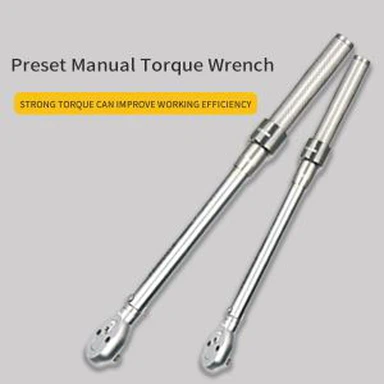
OAK majors in wrenches. OAK electric torque wrench is specially designed for tightening hexagonal bolts with torque requirements. It is equipped with a torque controller and the output torque is adjustable within a certain range. When working, the torque value needs to be set in advance. When the wrench reaches the set torque value, the wrench automatically stops.